Showing posts with label archive. Show all posts

Tuesday, 27 December 2011

A sense of place on my hard drive

Another trip into my archive – this time to practise some editing skills ahead of Assignment 4 – A Sense of Place.

I have thousands of photos of my hard-drive and one of the biggest sources is holiday photos – since 2004 I have seldom taken fewer than 500 photos in a one/two week break (these days it’s closer to 1000) and while they serve as a happy memory of those holidays I’ve never really tried to construct a meaningful mini-portfolio from any of them.

I sense that Assignments 4 and 5 will provide a large number of images and I thought it would be helpful to get a feel for the mental mechanics of assembling a ‘sense of place’ from a group of photos which were, often as not, an immediate reaction to my surroundings. The two sets I chose were of holidays in Ibiza and Fuerteventura – but what to say about them? – that’s the first question. They are both Spanish speaking/culture islands, in hot climates, with a lot of tourist activity, so how do I recall the differences?

In my memory Fuerteventura was very – and I mean very – hot. Some days with the breeze blowing it was like standing in a blast from a giant hairdryer. This was reflected in the landscape – lots of sand, barren rocks, limited vegetation and the occasional shadier village location providing fairly dramatic contrast to the general feel. Where we stayed there were also a number of fairly brash tourist strips.

Ibiza was also hot, but not as hot – there was more vegetation, the coastline was gentler and less barren, the colours richer. There were also more towns, and more people and busy market places. Although we travelled inland my lasting memories are of the coast and markets.

To me this is the key to the edit – starting with a clear idea of what I wanted to say about each place. This was especially important when it came to deciding whether or not to include my favourite holiday shots, because although they leap out at me as being worth including they aren’t about sense of place, they’re more about us as a family enjoying ourselves which is a different subject.

Initially I started with the formal first selects, second selects approach that  we developed in DPP but as I had already culled the technical failures and the majority of duplicates and I found very rapidly that I could reduce the list to 20 or so shots from each collection which stood out as matching the ideas I outlined above.

I struggled for people shots from the Fuerteventura set, simply because I didn’t take many and I also struggled to capture some of the barrenness of the interior because again I hadn’t taken many shots of the areas that looked like the surface of the moon – it was so hot I simply couldn’t be bothered to leave the comfort of the air conditioning in the hire car. Had I specifically been tasked to take these shots this would, of course, have been a different issue.

In the end I settled for the following 12 of Fuerteventura. They seem to me at least capture the sense of heat and the emptiness of the landscape, while at the same time showing some of the marked contrasts provided by the odd patch of vegetation and tourist activity.

Ibiza provided a different challenge as we spent rather more time in towns – so shots including people were not an issue whereas shots of the countryside/coast were a bit more sparse. In the end I went with a series which I think captures warmth , colour and liveliness which is a bit different from my initial recollections but seems to represent the place fairly well.

Concluding thoughts

It’s clearly important – faced with a collection of several hundred photos – to have an idea of what you hope to portray at the end of the edit. Equally, you have to be sensitive to what the photos are telling you where that differs from your memory. In assignments 4/5 this should be less of an issue as the idea and the execution are much closer together

Sunday, 29 May 2011

Exercise 10: Moment and Gesture – Another look in the archive

Another dismal day scuppers my plans to go into one of the nearby tourist hotspots for a go at this exercise, so in a bid to retain some momentum I’m going to dip into my archive again.

As the notes indicate there are two ways to try to capture the ‘moment’ which could perhaps be paraphrased as ‘machine gun’ or ‘sniper’. The first involves taking several shots in quick succession – or perhaps just even a huge number of shots -and picking the best, the second involves learning to anticipate the moment and catch it with a single shot.

Machine Gun

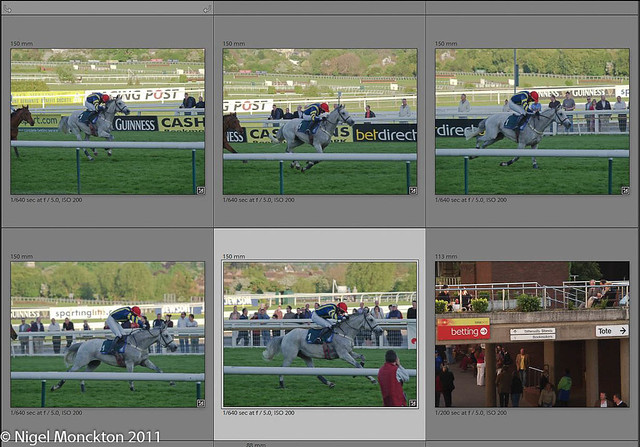
A couple of examples – first up this selection from a horse race at Cheltenham which I took in May 2007:

Cheltenham races

These are not the greatest shots in the world – my view was obscured by the rail and this part of the course was in shade against bright sunshine in the background, but there is enough here to illustrate a couple of things.

  • The camera was firing at about 2 frames a second. With a shutter speed of 1/640 it captures less than 0.2% of the action. Even at 10fps it would only capture 2%. So getting a ‘decisive moment’ is not guaranteed.
  • Within the 2-2.5 secs of the sequence above there are very distinct poses, some of which are more successful than others. The first is quite static – the horses legs are more or less four-square. The second has a sense of urgency – the legs are in the classic galloping position and the rider is starting to rise from his seat. The third has the rider in a nice position, but the horse looks as if it is falling forward. In the fourth the leg position is reminiscent of old-fashioned paintings, and in the fifth it looks like the horse is trying to slide to a halt. For me the second shot is the most effective – whether it is possible with practise to anticipate this moment rather than machine gunning for it I’m not sure. I suspect it is.

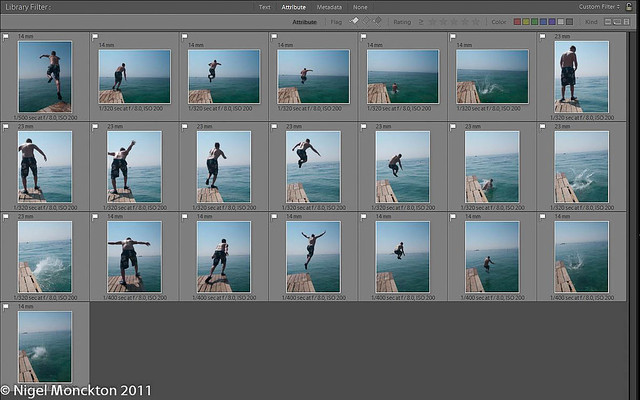
In this second example I am still using the continuous shooting mode. This one differs from the last in that Ashley was modelling for me, and I had an idea of the type of shot I wanted before I started, so in some ways this also relates to Exercise 6. As with the horse above, it was difficult, at my level of skill, to anticipate the key moment so I had, to some degree, to rely on chance.

Jumping series

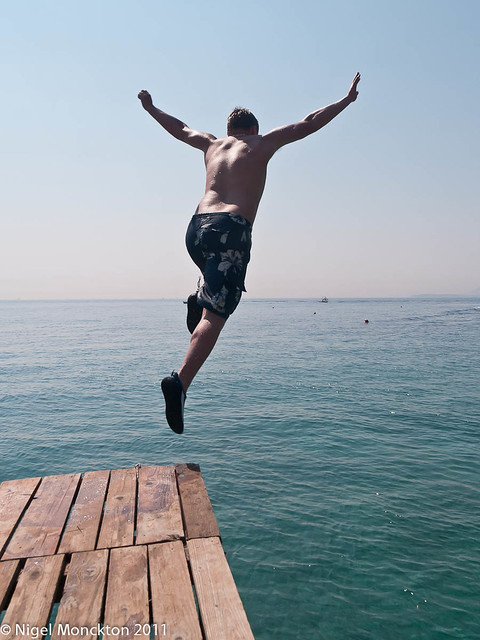
The best shot (middle of the third row) catches the event well I think. The alternative way to obtain this would have been to ask Ashley to repeat the jump several more times while I concentrated on getting a single shot at the peak of his jump. This may have worked reasonably well because there is a moment of relatively limited motion at the top of a jump. This is the kind of technique I have classified as ‘sniping’.

Top of the Leap


Sniper

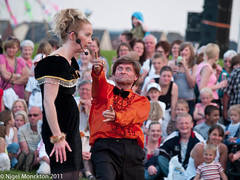
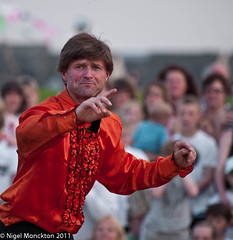
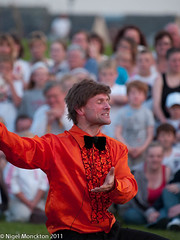
For the next couple of shots, taken at an outdoor event in 2009, I was trying to capture expression a shot at a time, while trying to get a range of expressions.

      Lakes Alive; Maryport 2009        Lakes Alive; Maryport 2009

The first – if I recall accurately – was rather easy because it was the finale of a particular trick and the guy in the red shirt held the pose for a couple of seconds, the second was a mix of anticipation and chance. The risk of this approach is that you only get one chance to get it right, so that the following shot has clearly missed the moment because he blinked as I pressed the shutter and the hand position is wrong. I think it likely that I would still have missed the shot with a machine-gun technique, although I shall never actually know.

Lakes Alive; Maryport 2009

Summary

Machine gunning or sniping? It seems to me both have their place although for my own part I’m not totally convinced by machine gunning. For fast action sequences – particularly if they are repeated it seems likely to give a good chance of results, although depending on the activity it may be as effective to concentrate on the single shot. For more general shooting good results can easily be obtained by trying to anticipate the moment – indeed the sound of the continuous shooting mode may be unhelpful in some situations.

Wednesday, 11 May 2011

Place - Maryport

As this blog is about People and Place it suddenly occurred to me that the following is of relevance. Produced it a couple of years back as a personal reaction to Maryport. You wont find any people in it - as I observed in my previous post my photos have until recently been largely uninhabited - that's one of the reasons I took this course. Hopefully it provides a sense of place though.

Tuesday, 10 May 2011

Exercise 19: Single Figure Small–a quick look in my archive

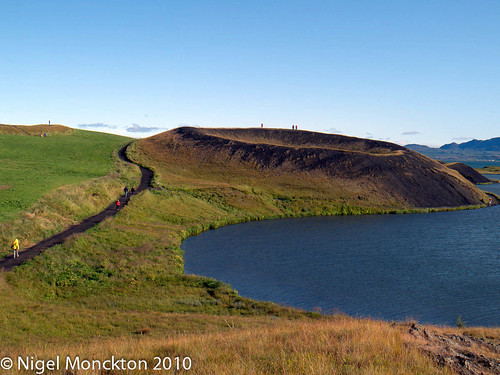
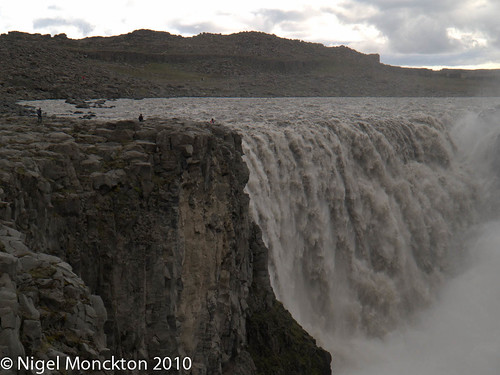
It was only when I was looking through my photos searching for examples of this approach that I realised how few of my photos actually contain people in any meaningful way. You could be forgiven for thinking that most of the places we visit on holiday are largely uninhabited except by members of my family. In fact, for the most part, the only way I use non-family in my photos is small – usually to give a sense of scale, and very occasionally as the subject or as a key part of the image.
These two from Iceland are about sense of scale – in fact the central people are so dwarfed by the landscape they are hardly visible.
Pseudocrater adjacent to Lake Myvatn, Skútustaðir
Dettifoss 

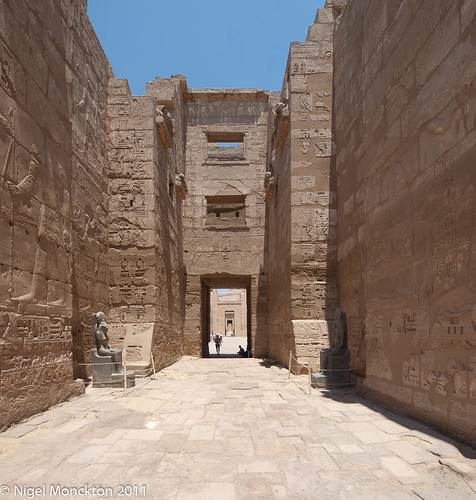
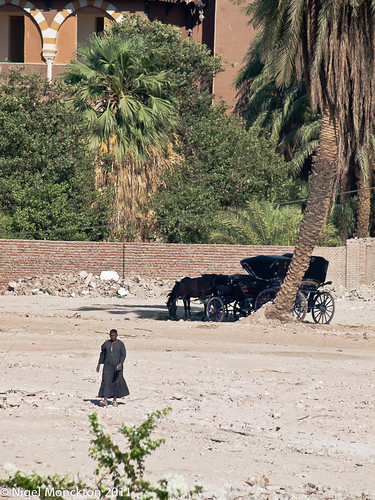
Use of an extreme wide-angle lens can exaggerate the effect of a small figure as in this picture – where the wide angle makes the building – which was already large -appear relatively larger by reducing the prominence of the figure. Somewhere in Egypt - I'll work out where soon

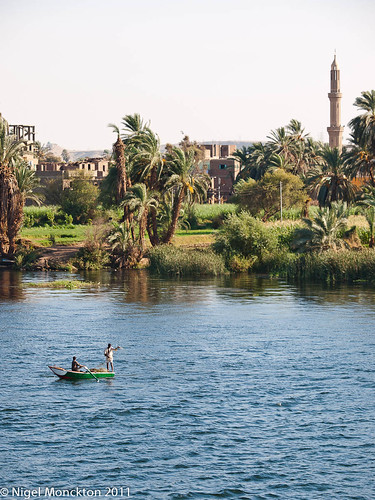
Then there are a few examples of a small figure being used in the way that the course notes suggest as an accent in the picture. These two would be nothing without the people.
Luxor - from the cruise boat Nile Cruise

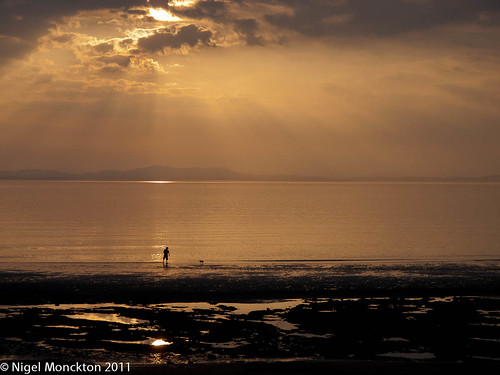
Another example from my archive of using a person as an accent is this sunset shot – again I feel this picture would be pretty non-descript without the inclusion of the figure – tiny though he is. I had to be quite patient with this shot to wait for him to wander along the beach to the intersection of the shoreline with the highlight from the setting sun.

Looking towards Criffel from Maryport Prom

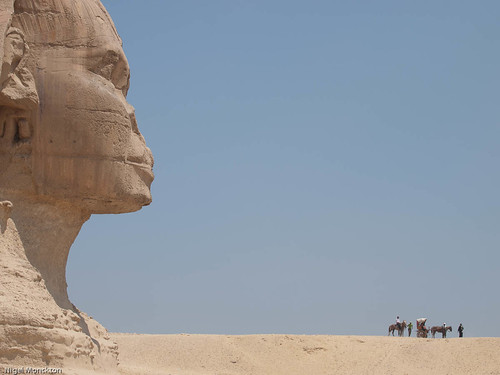
And finally, another shot from Egypt. I’m quite proud of this one as it got me to the finals of the Wanderlust Photographer of the Year competition (Travel Icons category). Technically it’s not ‘single figure’ but it clearly fits with the idea of a relatively small human presence making a significant difference to the shot. Without their presence this would simply be a rather oddly composed shot of the Sphinx.

The Sphinx

Friday, 11 February 2011

PnP1: Ex 3: Thinking about lighting (ii) - some more ideas

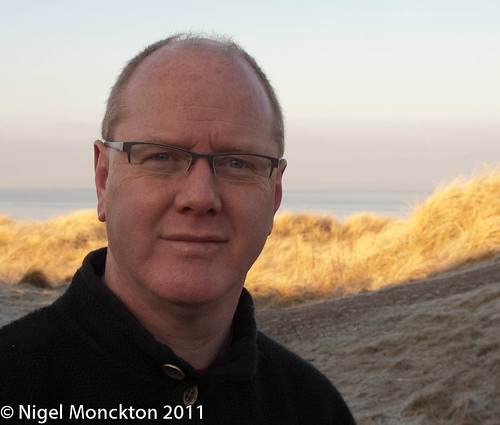
The first part featured indoor lighting so though I’d step outside for this second part using the sand dune location I found in Exercise 2.

First off direct sunlight:

Self portrait - low sun and skylight

This was taken with low morning sun which provides very hard shadows, and has caused me to squint a little. There may well be craggy, character-filled faces that work well in this light – particularly in monochrome – but I don’t think I’m one of them.

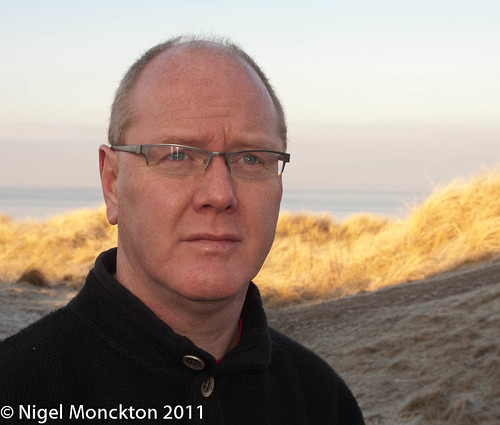
Next I moved into relatively deep shade behind one of the dunes, so that I was only lit by light from the blue sky. After correcting the colour balance this was the result:

Self portrait - skylight only

The lighting is much softer and the hard shadows are gone. However the overall effect is a bit flat, with the bright background being a bit too dominant. This leads to the third shot, which is the same as above, but with some fill flash from the on-camera flash. Colour balance was tricky here – if I took more of the red from the face the grass in the shadow began to look a bit unhealthy.

Self portrait - skylight and fill flash

There is also a bit of a problem from flash reflected in my glasses, but overall I think this is the most pleasing of the three shots.

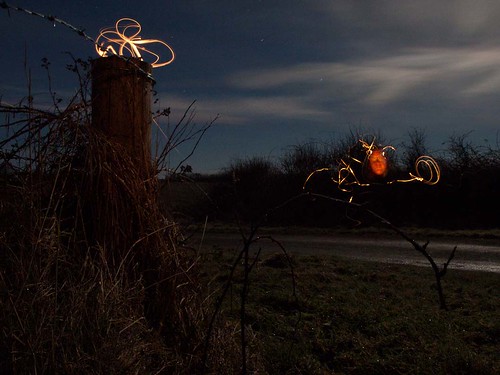
One final outdoor shot – this one was intended as a bit of fun and has already been referenced in the previous part of this exercise – it’s a mix of moon and torchlight with a long exposure and some light trails for good measure. Am tempted to call this ‘Portrait of the Photographer as a Ghostless Head’.

365/334

And to finish a couple more examples of different lighting conditions that can be used for effective portraits depending on the effect required.

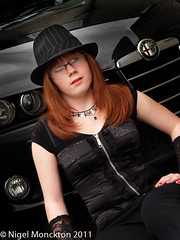
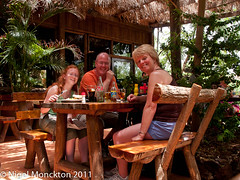
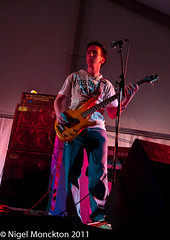
Naomi with the Alfa   Al fresco lunch at Fuerteventura Zoo   Stephen at the Beer Festival

The first was taken in totally flat, overcast lighting in the shade of the house, which helped manage the blacks, and saturated the colour of my daughters hair to good effect. the second is taken under dappled shade in an outdoor cafe in Fuerteventura – the lighting adds to the feeling of relaxation and overall ‘summeriness’. The final shot is one of my son’s friends in action with their band at the local beer festival – the mixed colours of the lighting add to the overall concert effect – which would have been ruined by the use of flash.

Saturday, 15 January 2011

People and Place1: Ex2: Thinking about location

The stated aim of this exercise is to provide practise at translating real world setting into a useful image element. This would be more straightforward if the weather had not been foul or freezing for days. In the end – to make progress – I have collected a variety of different location from around my home and some examples which I hope show I understand the aim of the exercise from my archive.

First up the house locations – the living room, the bedroom and the dining room in that order.

PC303605.jpgP1013629.jpgPC303598.jpg


The first question is do these meet the criteria of being very different. I believe they do: The first is a large evenly lit room with relatively muted colours, the second location is in front of a west facing window offering lots of natural light and the third is a colourful surrounding with a very obvious prop – the piano.

Before returning to one of these to shoot the exercise image, here are a few from the archive:

P4233546a.jpg

This one was taken in the window of the Tower Bank Arms at Far Sawrey while we were waiting for lunch. It was a particularly rainy day and there was a lot of very diffuse light coming through the bay window in which we were sitting which made it ideal for a portrait shot. The curtain behind provided a backdrop which removed most of the distracting detail through the window, and even had roughly matching roses as a pattern – giving,I think, a classic feel to the shot.

Tower Bank Arms, Far Sawrey

We were in the bay window at the left of the above shot.


Next up is this moderately humorous one of my son in Ibiza Town a couple of years back. We found these mannequins outside a clothes shop while wandering around town. The use of them as props for the humour is obvious – I’m not a great believer in portraits revealing character but this one may be an exception – especially as the pose was his suggestion.

Dummies

And finally from the archives two shots of my daughters – the eldest with her first car, minutes after getting it home and the youngest at Charles de Gaulle airport – the expression on her face says as much about the airport as you really need to know. With hindsight a little fill-flash to lift the face would have been good in this shot.

PICT0005.jpg Tedium at CdeG Airport

Back to the exercise

The final location I chose to complete the exercise was at the piano. I chose it because it is an essential part of my wife’s life and I can’t imagine any full photographic interpretation of her personality that did not have a musical reference.

PC313618.jpg


Edit: 15 February 2011 – Some outdoor locations

First up this one at Silloth – the dunes – which I used to good effect in the first exercises of DPP1, and in the context of this course I have used in Ex3. Lovely clear morning light, a variety of pleasant backdrops – grass, beach, sea – and usable for a range of shots from family outings to outdoor or spring/summer fashion. There is also a hotel nearby with a range of facilities for a more professional shoot.

Silloth Dunes

Next up is my garden – it’s not a great location at this time of year but as the weather improves it offers a range of options. This is not the best of photos but it shows the essential ingredients. Sunlight usually comes from the left. The apple tree (foreground left) provides dappled shade across the lawn for a number of hours each day, the arch is usually covered in in mix of flowers, including large roses, and the shrubs around the pond in the middle produce a fairly solid wall of green for a backdrop.The large shrub near the back also produces an area of shade.

The Garden

One thing my area lacks is easily accessible industrial areas for more ‘street’ style shoots – so my next aim is to track down a couple of locations that are easily accessible.